The Anatomy of a System: How to Build a CRM That Actually Drives Revenue
Most small business owners treat their CRM like a digital filing cabinet. You log in, add a name, and hope you remember to follow up. The result is a chaotic list of contacts that produces zero predictable revenue.
The reality, yes, is simple. A CRM should be the central nervous system of your business. It is not a place to store data. It is a machine designed to turn existing contacts into real opportunities.
Here is the deal: if your CRM requires constant manual updating to be useful, it is broken.
Key Insights
Stop treating your CRM like a Rolodex. It should actively manage relationships, not just store names.
Automate routine follow-ups. Let the system handle the basic check-ins so you can focus on high-value conversations.
Define clear pipeline stages. A visual pipeline shows you exactly where every opportunity stands.
The Chaos of Manual Tracking
When you rely on spreadsheets or basic contact lists, you introduce friction at every step. A lead comes in, and someone has to remember to email them. A week passes, and someone has to remember to follow up.
This manual process guarantees dropped balls. It forces you to rely on human memory for critical business functions. That is a fragile way to operate.
You end up buying more leads because you think you have a traffic problem. In truth, you have a conversion problem. You are leaking opportunities because your system cannot catch them.
Manual tracking systems inevitably lead to chaos and missed opportunities.
The Solution: An Operational CRM
An operational CRM does the heavy lifting for you. It automates the routine tasks so you can focus on having authentic conversations.
Here is how you build a CRM system that actually works:
Step 1: Centralize Every Interaction
Your CRM must be the single source of truth. Every email, text message, and phone call needs to live in one place. When you look at a contact record, you should see the entire history of the relationship instantly.
Step 2: Automate the First Response
Speed matters. When a new inquiry arrives, your system should acknowledge it immediately. A simple, automated text message -- "Hi, I saw your request and will review it shortly" -- buys you time and builds trust.
Step 3: Build Clear Pipeline Stages
Your pipeline is a visual representation of your sales process. Define clear stages: New Lead, Contact Attempted, Meaningful Conversation, Proposal Sent, and Closed. Move contacts through these stages systematically.
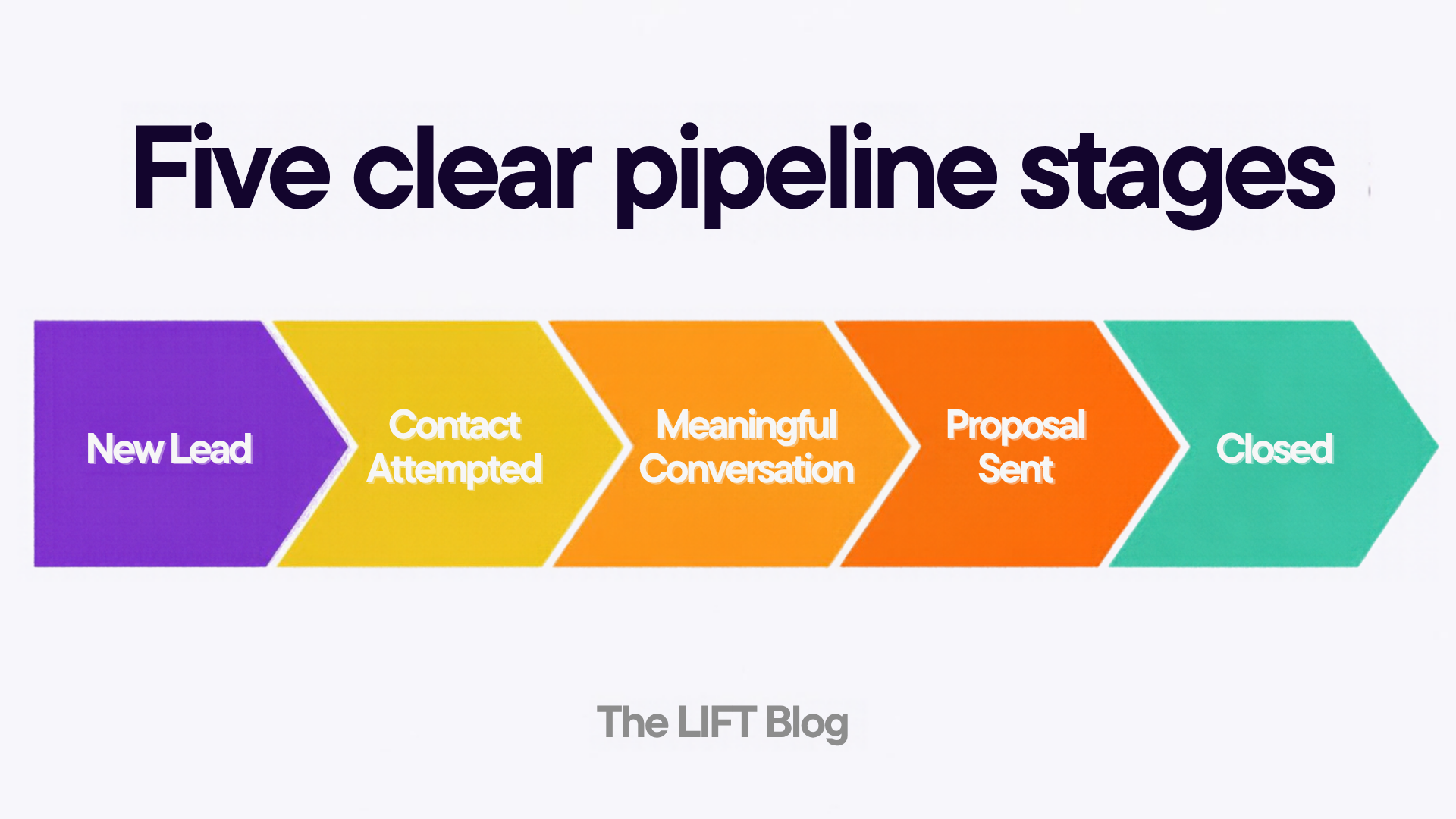
A visual pipeline provides instant clarity on where every opportunity stands in your sales process.
Making the Shift
Transitioning to an operational CRM requires discipline. You have to commit to using the system daily.
But the payoff is real. You stop worrying about who you forgot to call. You gain clear visibility into what is actually happening inside your business.
You start generating more revenue from the contacts you already have.
If your current CRM feels more like a chore than an asset, it is time for a change. Book a call to see how the LIFT Marketing System can organize your contacts and drive predictable revenue.