The Invisible Founder: Why Owners Need a Personal Brand
You have good people, happy clients, and years of hard-won know-how. Then a prospect searches for help in your field and finds someone else. Usually it is a competitor with half your experience who simply shows up online every week.
That is the invisible founder problem. Expertise nobody can see works like a referral nobody hears about. This post covers why people trust people before logos, why a quiet founder can still build authority, and a simple weekly system to start.
The short version
- Prospects check out the person before they call the business.
- Most owners have the expertise. What is missing is visibility.
- Authority comes from being clear and consistent, not loud.
- Treat your voice like any other business system: a schedule, a source of topics, and a review step.
Why do people trust founders more than company pages?
Think about the last time you hired an accountant, a roofer, or an insurance agent. You probably looked at the website for a minute and then looked for a person. Who runs this? Do they explain things in a way I understand? Would I like talking to them?
Nielsen's Global Trust in Advertising research has found for years that recommendations from people are among the most trusted forms of marketing, well ahead of brand-run ads. A founder sharing what they know is the closest thing a small business has to a recommendation at scale.
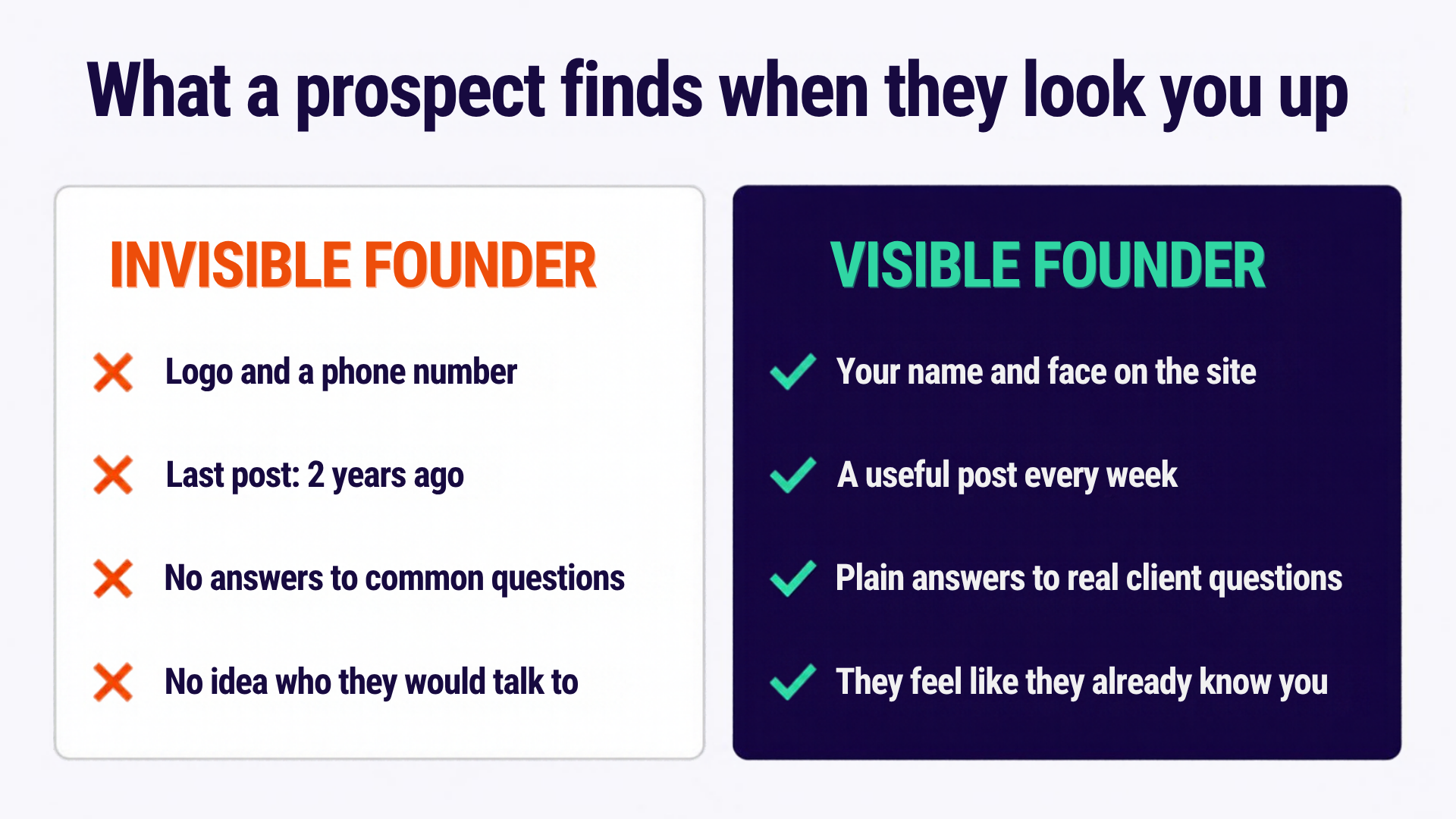
When you stay invisible, prospects have to trust a logo, and that takes longer and costs more. When your face and your thinking are out there, people arrive at the first call already halfway to yes.
Why is your personal profile easier to grow than your business page?
Social platforms tend to show posts from people more than posts from business pages, because they want conversation and they want businesses to buy ads. LinkedIn has said plainly that it favors posts that spark real discussion between members.
So the most efficient channel for your company's message is often your own name. Not instead of the business page, but ahead of it.
How do you build authority without being loud?
The biggest myth about personal branding is that you have to be an influencer: always filming, always hot-taking. You do not. You need to be a teacher.
Start with what you already say every week. Write down the last three questions a prospect asked you. Those are your first three posts. Answer each one in plain language, the way you would across the table.
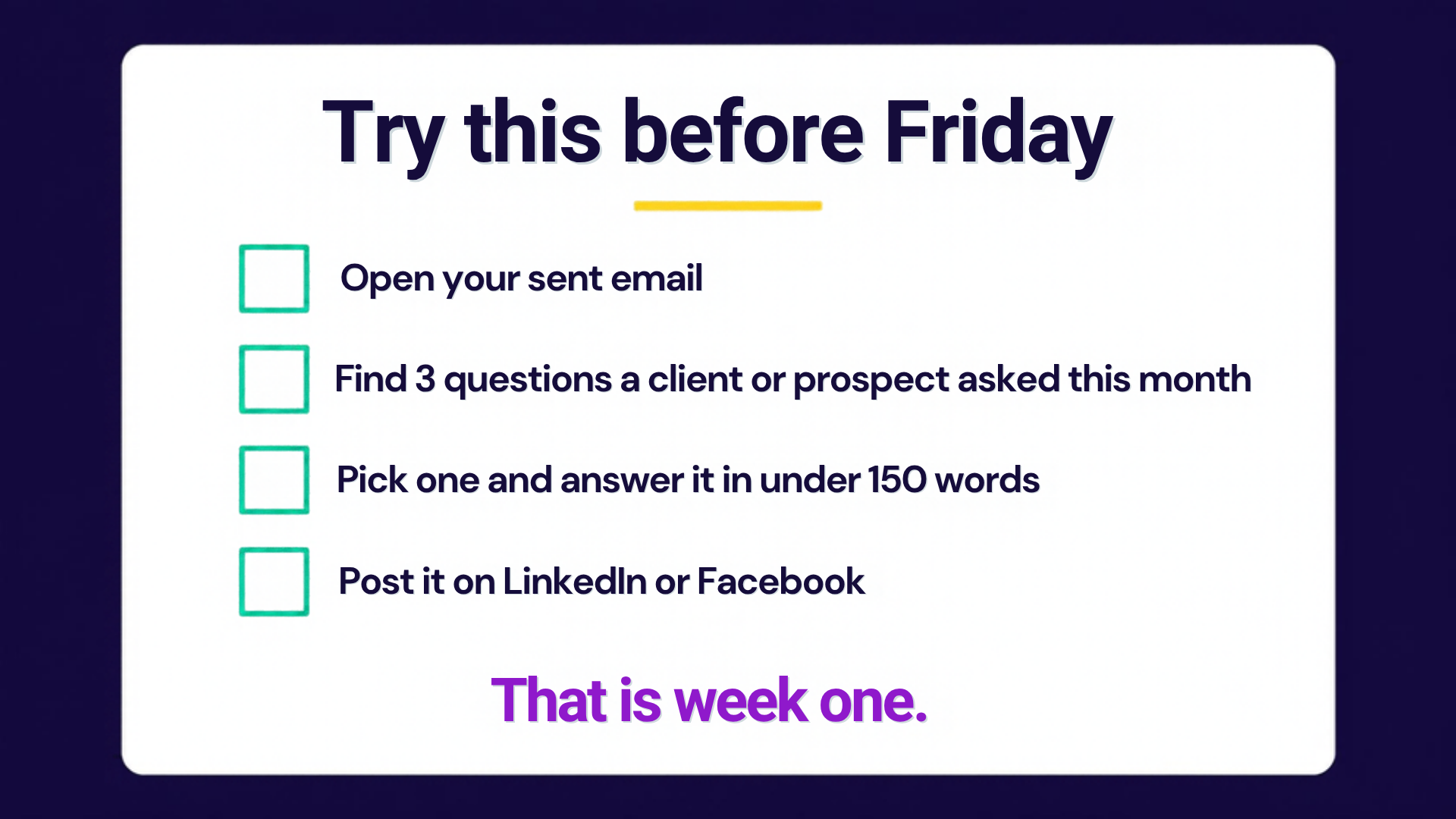
Try this before Friday
Open your sent email and find three questions a client or prospect asked this month. Turn one into a short post that answers it in under 150 words. Post it. That is week one.
Other places to show up: a short article on your site, a local talk, a Lunch and Learn for referral partners. Go where your ideal clients already pay attention.
What does a personal brand system look like?
Most founders stall because they post when inspired. That means twice one month and then nothing for six weeks. Your voice needs the same thing your follow-up and your intake need: a system.
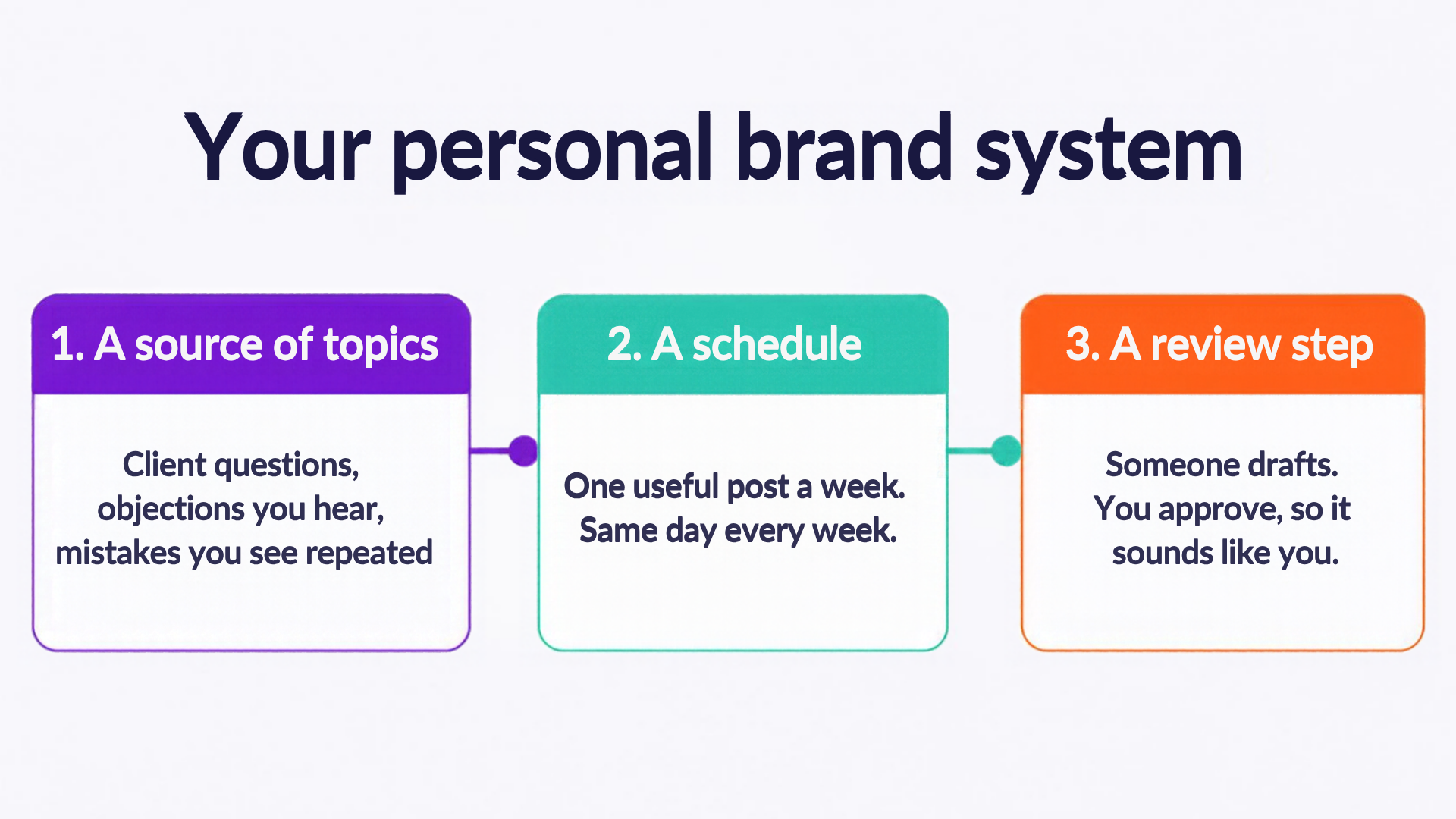
- A source of topics. Client questions, objections you hear, mistakes you see repeated.
- A schedule. One useful post a week to start. Same day every week.
- A review step. Someone, or something, drafts. You approve, so it always sounds like you.
Strategy comes before tools here. A content app will not fix a missing topic source or a skipped review step. Get the routine right first; then pick tools that support it.
Frequently asked questions
Do I have to be on video? No. Written posts, articles, and talks all build authority. Video helps, but it is optional.
How often should I post? Start with once a week and keep it up for three months before you add more.
Will this take hours? It should not. One client question, one clear answer, about 20 minutes.
One question to sit with
If a great prospect looked you up today, what would they find, and would it sound like the person your clients already trust?
If you want one practical idea like this each week, subscribe to The LIFT Signal, a free weekly email for small service business owners. Strategy before tools, delivered on Fridays.