
The 1-to-7 Content System: Turn One Customer Question Into a Week of Useful Content
Most businesses do not have a content shortage.
They have a content action problem.
A customer asks a smart question on a sales call. Your team gives a useful answer. Then the moment passes, nobody saves it, and by next week you are back to staring at a blank page trying to invent content from scratch.
That is waste.
A better move is simple. Take one real customer question, answer it well once, then turn that answer into a full week of useful content.
Key insight: You do not have an idea problem. You have a system problem because your best ideas keep dying in private.
Key Insights
Your best content usually starts as a real customer question. That means the topic already has proof of relevance.
One strong answer can do a lot of work. You do not need seven fresh ideas to publish seven useful pieces.
Repurposing only works when the source piece is clear. Weak source material creates seven weaker versions.
The goal is not more posting. The goal is more chances for the right buyer to understand how you think.
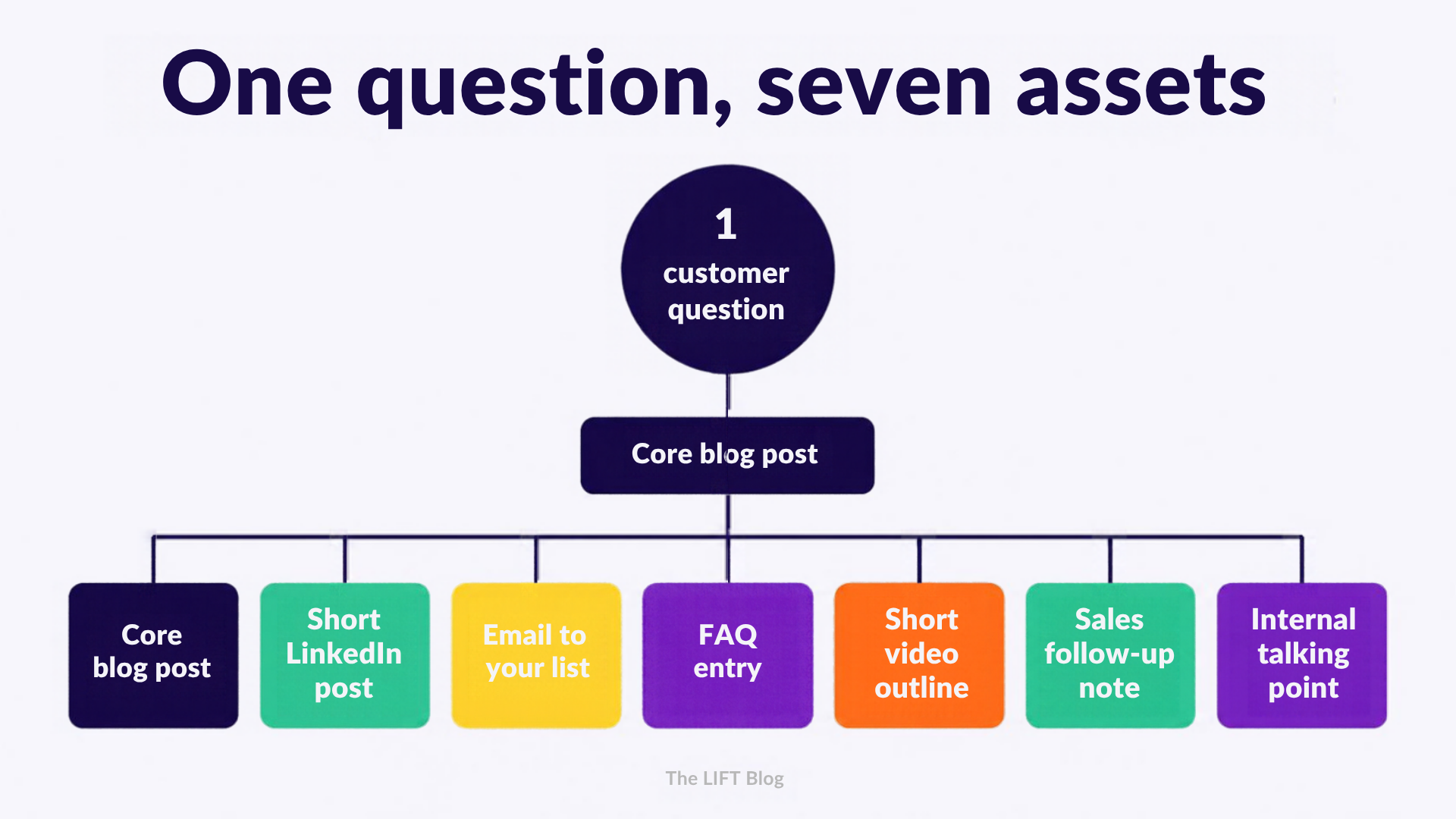
The source answer matters because every smaller asset depends on it.
The real mistake is treating content like a performance instead of a system
A lot of owners still approach content like this.
Wake up. Think of something smart. Write it fast. Post it. Repeat tomorrow.
That is not a strategy. That is a creativity tax.
And it breaks the minute your week gets busy.
A better system starts with a question you already hear in the business. Something a customer asks in a call. Something a lead asks before buying. Something your team explains over and over.
That is where your content should begin.
The 1-to-7 content system
The system is simple.
Start with one useful source answer. Then build seven small assets from it.
AssetPurposeBest format 1. Core blog postOwn the full answer800 to 1,200 word article 2. Short LinkedIn postPut the main idea in front of new peopleText post 3. Email to your listReconnect with warm contactsSimple email with one takeaway 4. FAQ entryReduce repeated explanationsWebsite FAQ or help page 5. Short video outlineMake the idea easier to hear and trust60 to 90 second talking video 6. Sales follow-up noteHelp leads who are already in motionShort value-add message 7. Internal talking pointHelp your team say it the same wayCall note or script snippet
That is seven outputs from one real issue.
And none of them need to start from a blank page.
Step 1: Capture the question when it happens
Do not trust your memory here.
If a customer asks the same thing twice, it should go into a running content bank.
Keep the bank simple. One spreadsheet, one CRM field, one note in your project system. It does not matter.
What matters is saving the question in the customer's words.
Good examples include questions like:
How long will it take for my insurance claim to be processed?
What are the signs that my roof needs to be replaced instead of repaired?
Does my homeowner’s policy cover storm damage?
How do I prepare my home for a service technician’s visit?
Those are content prompts. They are also sales friction clues.
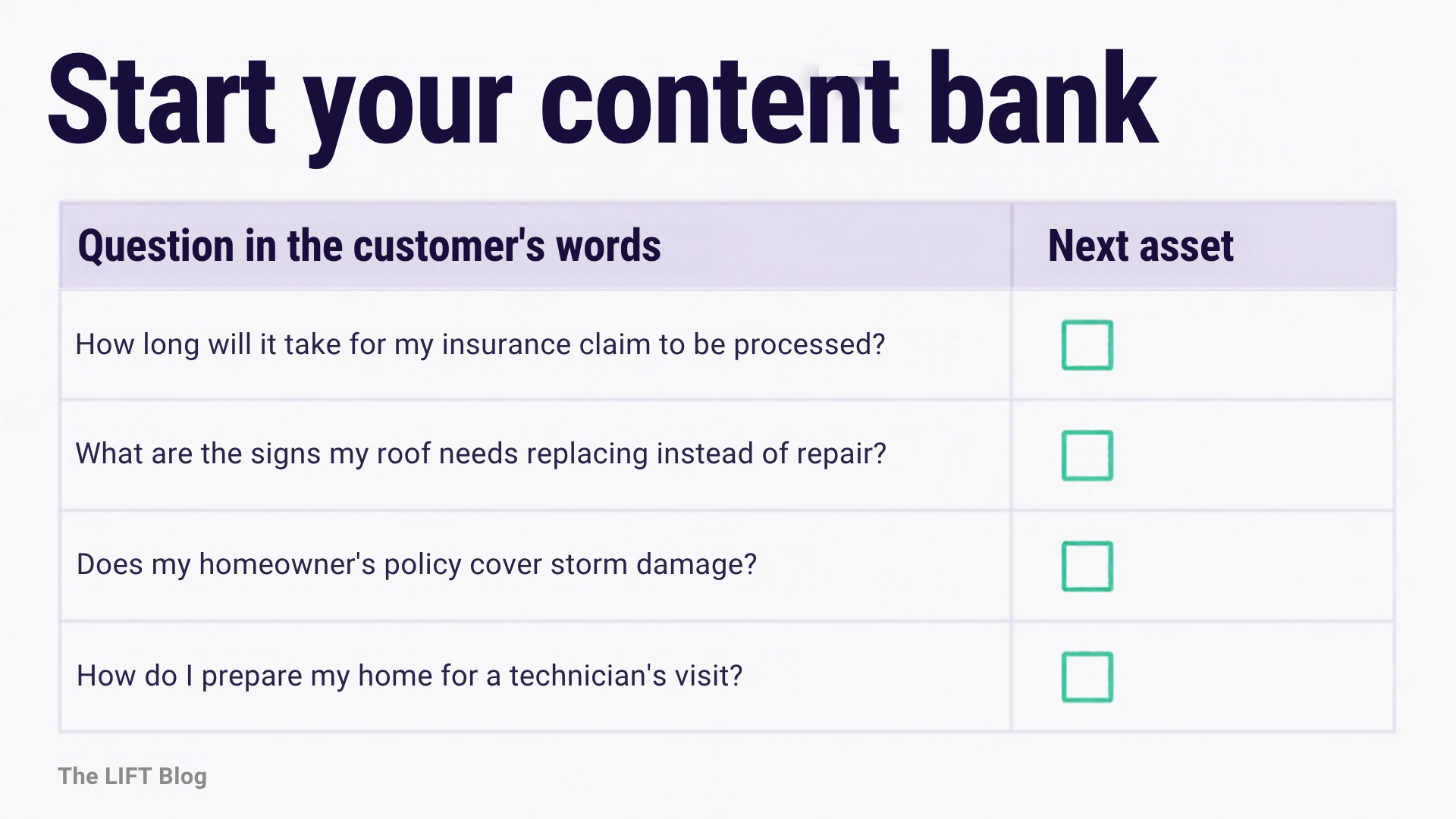
Good content starts when real questions stop getting lost.
Step 2: Build one complete answer first
This is where a lot of repurposing advice falls apart. People try to repurpose before they have said anything worth repeating.
Write one solid answer first—a real answer, not a vague opinion post. Make it specific enough that someone could act on it after reading. That source piece becomes the anchor; every other version gets easier once the thinking is clear.
Step 3: Strip one answer into smaller jobs
A blog post and a sales follow-up should not sound the same because they do different jobs. Instead of copying and pasting the same paragraph everywhere, pull out the part that belongs in each channel:
The blog post explains the full system.
The LinkedIn post names the problem and gives one useful shift.
The email reconnects with people who already know you.
The FAQ removes friction before the next sales call.
The short video makes the idea feel more human.
The sales follow-up gives a lead one clear piece of value.
The internal note helps your team stay consistent.
Same idea, different job.
A real example you can steal this week:
Say a prospect asks, "Do I need better marketing or just better follow-up?" That is not just a sales question; that is a content asset. Here is how one question turns into a full week of useful material:
Blog post: Why most businesses do not have a lead problem—they have a follow-up problem.
LinkedIn post: A short opinion on why more leads usually hide weak follow-up.
Email: A note to your list explaining the one place leads get stuck after inquiry.
FAQ: What happens after someone fills out our form?
Short video: A 60-second explanation of the first handoff after a new lead comes in.
Sales follow-up: A quick note: "You mentioned follow-up speed. I wrote up the three places most teams leak leads. Happy to send it."
Internal talking point: A one-line team rule: every new lead gets a next step before the day ends.
Now the question did more than fill one blog slot. It improved marketing, sales, and team clarity at the same time.
Step 4: Publish on a simple rhythm
This part matters because good ideas still disappear without rhythm. Use a one-week sequence:
Day 1: Publish the blog post - This becomes the source answer.
Day 2: Share the short LinkedIn post - Pull attention back to the core idea.
Day 3: Send the email - Re-engage warm contacts with a useful takeaway.
Day 4: Add the FAQ or website snippet - Reduce repeated sales friction.
Day 5: Record the short video - Make the same idea easier to trust.
Day 6: Use the sales follow-up version - Support live opportunities with context.
Day 7: Add the internal talking point - Keep the team aligned for next week.
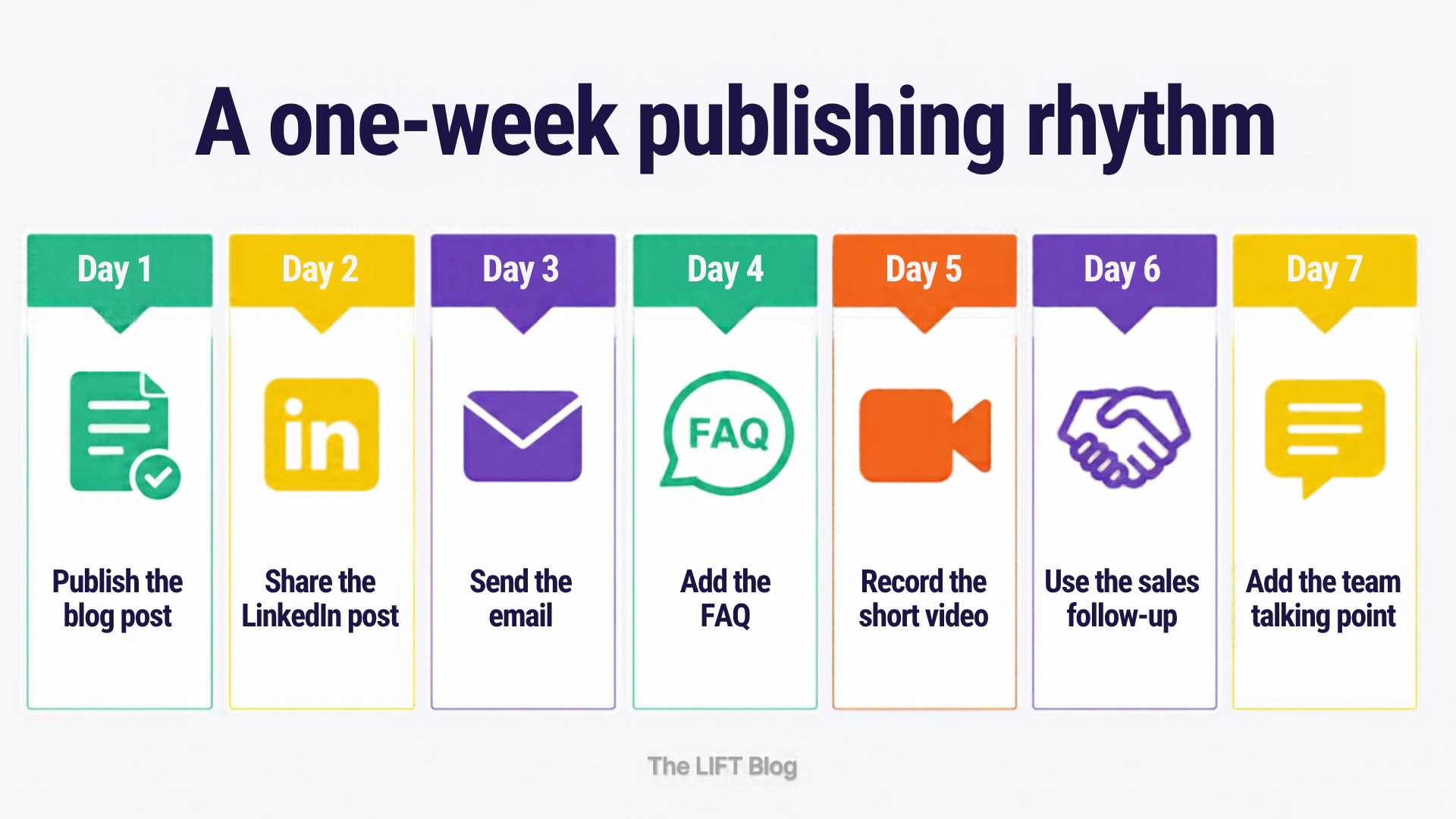
Repurposing works best when it follows a repeatable weekly rhythm.
The reality is simple. Content gets easier when your business stops asking it to invent new ideas every day.
What this looks like in real life
Say a prospect asks, "Do I need better marketing or just better follow-up?"
That one question can become a full article on operational marketing, a short post on pipeline leakage, an email to your list, a sales note, and a talking point for your next discovery call.
You are not milking content.
You are making one useful answer do the work it should have done the first time.
Common mistakes that break the system
MistakeWhy it hurtsBetter move Starting with platform formatYou shape the idea around the channel instead of the customer problemStart with the question first Repurposing weak materialThin ideas become thinner across channelsBuild one strong source answer first No capture habitGood questions vanish after the call endsKeep one running question bank Publishing without reuseEach asset dies after one useTurn every strong answer into a weekly stack
A simple scorecard to track for 30 days
You do not need vanity metrics to know whether this is working.
Track four numbers and review them once a week.
MetricWhat to watchWhy it matters Customer questions capturedAre you collecting fresh questions every week?This tells you whether the system has real inputs. Source articles createdDid at least one strong answer get fully developed?This keeps repurposing from becoming shallow. Assets created per source pieceDid one article actually turn into multiple useful outputs?This measures whether reuse is happening in real life. Conversations started from contentDid content create replies, booked calls, or useful questions?This is the point of the whole system.
That last number matters most.
Because content is not just there to fill a feed. It is there to help the right people start a conversation with you.
Closing
You do not need a bigger content calendar.
You need a better extraction system.
Start with one real question from this week. Answer it well. Then turn that answer into a full week of useful content.
For a softer next step, look at the last five questions prospects asked you and ask which one deserves to become your next source piece.