You Already Have What It Takes to Build a Business. You Just Don't See It Yet.
I grew up watching my parents run their bakeries.
There were no funnels. There were no ad campaigns. There were no follower counts, engagement metrics, or algorithm hacks.
There was just showing up, serving people, and building a reputation one conversation at a time. And somehow, it worked. They built a sustainable, profitable business on the strength of their relationships.
That is where I learned that genuine connection with customers is more powerful than any marketing trend. The modern marketing world seems to have forgotten that lesson.

The Noise Trap
Today, the marketing industry tells you to chase mass attention. Go viral. Build a huge audience. So you spend your time trying to figure out the algorithm, feeling like you're constantly falling behind. The pressure to stand out in a noisy, digitally saturated market can be overwhelming.
It is easy to feel like you are just not cut out for the game.
But the game everyone is telling you to play is not the only one available. The real opportunity isn't about becoming an internet celebrity. It is about using human connection as a competitive advantage to build a powerful, sustainable business on the foundation of relationships you already have.
The tools to build something real are already in front of you. The question is whether you are playing the right game.
Key Insights
• Mass attention is a trap. For most service providers and consultants, chasing virality leads to burnout, not revenue.
• Your existing network is your greatest asset. Turning your current contacts into a predictable pipeline is the most reliable way to grow.
• The barriers to entry are gone. You no longer need millions in ad spend or retail distribution to start a real business.
The Mirage of Mass Attention
When you look at the internet today, it is impossible to ignore the massive success of large-scale creators. They command audiences of millions and have built incredible businesses. It is impressive. And it is easy to think their path is the only path.
For most service providers, consultants, and specialized business owners, trying to replicate that model is a trap. It pulls you into a game of endless content creation, where you are constantly fighting for the algorithm's favor. You are judged on views and followers, not on trust and impact.
The reality is simple.
You don't need millions of followers. You need a few dozen clients. You don't need to go viral. You need to build a reputation with the right people. Chasing mass attention forces you to compete on a playing field where the odds are stacked against you. It burns you out and distracts you from the one thing that can actually grow your business.
The size of your audience is a vanity metric. The strength of your relationships is a business asset.

The Bakery Approach to Modern Marketing
So if the answer isn't to chase a bigger audience, what do you do instead?
You shift your focus from broadcasting to connecting. You stop trying to be famous and start trying to be helpful to the people you already know.
My parents didn't have an email list, but they knew their customers. They knew what they liked, when they came in, and what they needed. They had a system for relationships, even if it wasn't digital.
Your network of contacts, whether it is 50 people or 500, is the most valuable asset you have. You just need a system to activate it.
Human connection as a competitive advantage means prioritizing authentic relationships over mass attention. Instead of chasing more followers, you focus on building trust and loyalty with your existing contacts. This approach creates sustainable growth because it turns your network into a powerful engine for referrals, repeat business, and real opportunities.
Three Steps to Start Connecting
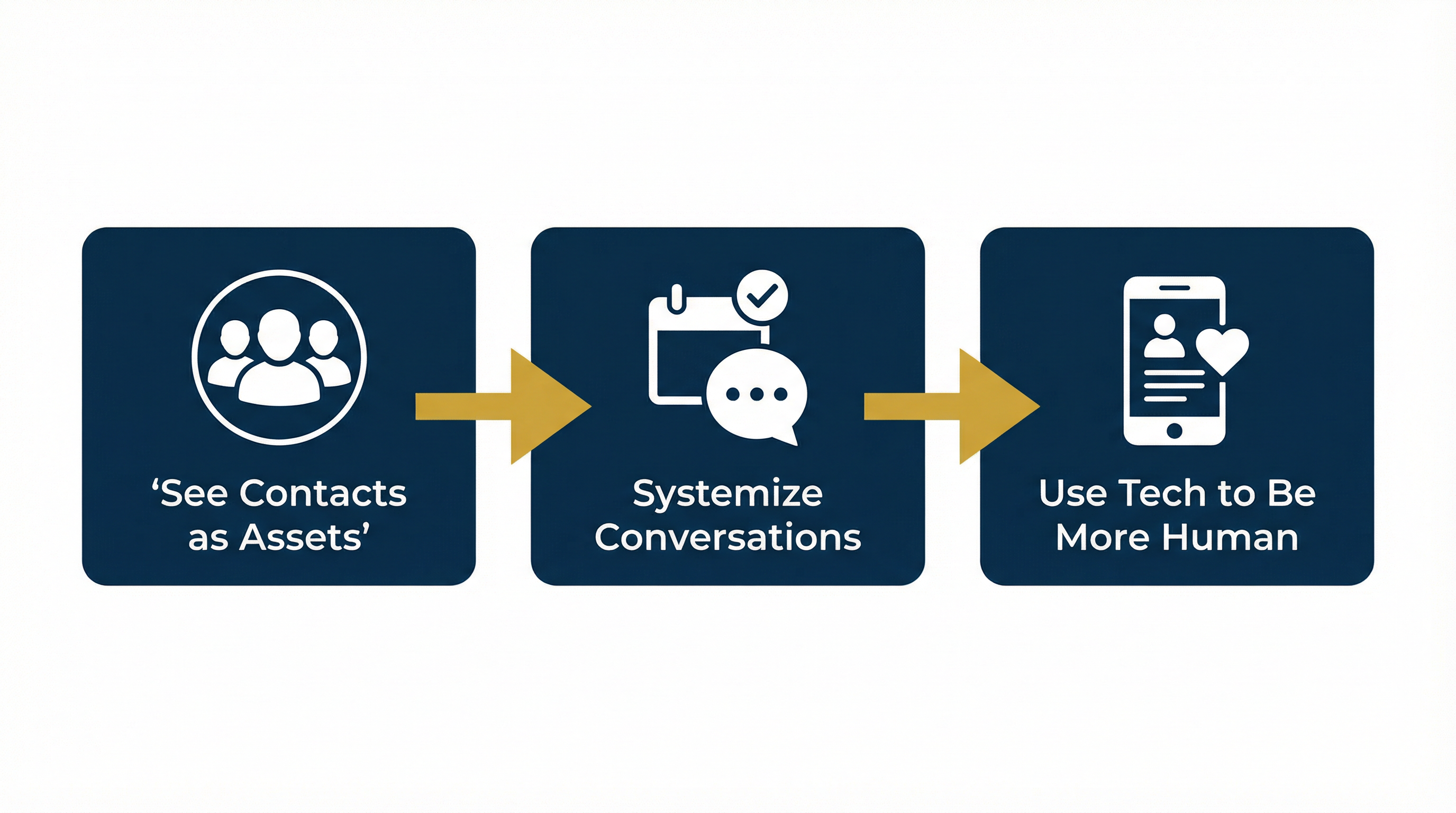
The process for doing this is simpler than you think.
Step 1: See Your Contacts as an Asset, Not a ListYour email list or your LinkedIn connections aren't just a resource to be spammed with newsletters. They represent real people with problems you can solve and networks you can access. Stop thinking about "blasting" your list and start thinking about how you can consistently provide value to the people on it.
Step 2: Systemize Your ConversationsMeaningful connection doesn't happen by accident, especially when you are busy. You need a simple, repeatable process for checking in. This could be as simple as reaching out to five contacts a day with a helpful article, a genuine question, or an idea you had for them. The goal is to start a conversation, not to make a sales pitch.
Step 3: Use Technology to Be More HumanThis is where most people get it wrong. They use technology to automate everything and remove the human element entirely. But the real power is in finding the balance between efficiency and authenticity. Use a CRM to remind you who to talk to. Use AI to help you draft a starting point for an email. But the final message, the actual connection, must come from you.
One personal, well-timed message to the right person is worth more than a thousand automated blasts to the wrong ones.
Stop Chasing Ghosts
The tools to build your own empire are sitting right in front of you. The platforms are there, the opportunity is real, and you don't need anyone's permission to start.
But the winning strategy isn't what the gurus are selling. It is not about becoming a celebrity or mastering the algorithm. Your greatest strength is your ability to connect with another person, understand their problems, and help them.
You already have a network of people who know, like, and trust you. And that is an advantage that no amount of ad spend can buy.
If you are tired of playing the algorithm game and want a system that actually turns your contacts into clients, let's talk.
Explore the LIFT Marketing System and learn how to build a business on genuine connection.